
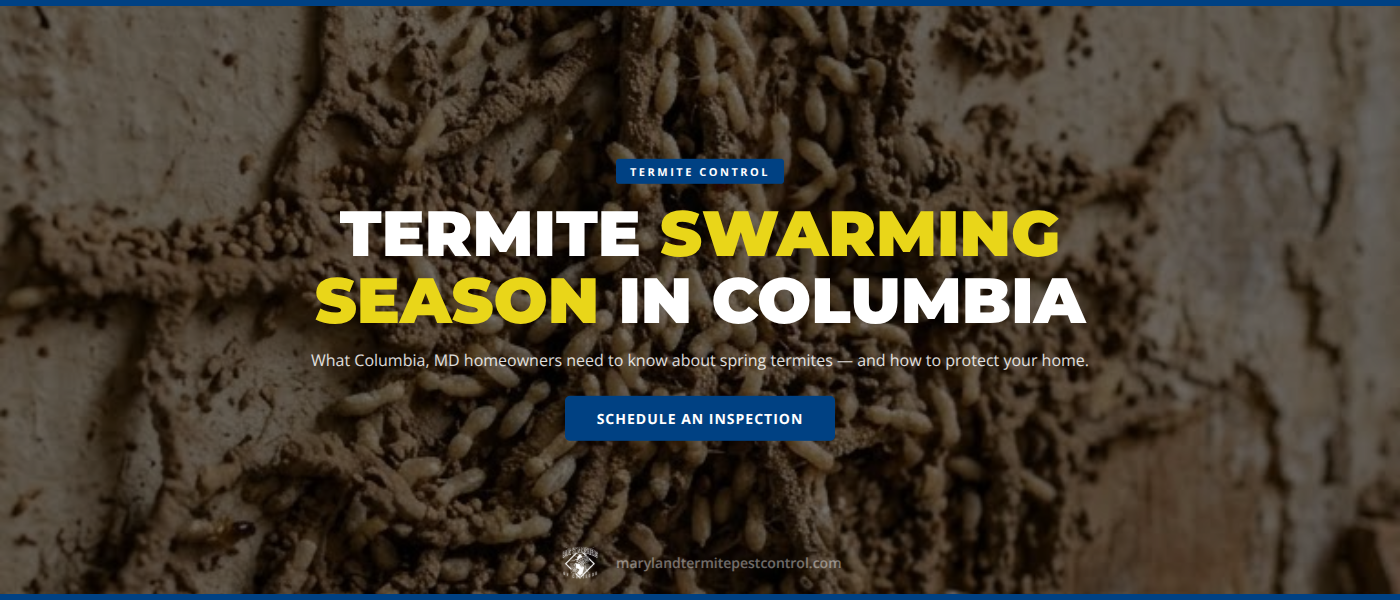
If you've spotted winged insects clustering near your windows or noticed tiny piles of shed wings on your floors, those are the unmistakable signs of termite swarming season columbia md homeowners encounter every spring. At Bug Squashers, we respond to more termite calls during April and May than any other time of year — and for good reason. Maryland's climate is uniquely favorable to Eastern subterranean termites, and Columbia sits squarely in their territory.
Understanding what a termite swarm means, how to identify swarmers, and when to call a professional can make the difference between catching an infestation early and facing costly structural repairs down the road. In this guide, we cover everything you need to know about termite swarming season and how to protect your home this spring.
Termite swarming season is the period — typically March through May in Maryland — when mature underground colonies release winged reproductive termites, called alates or swarmers, into the air. Their mission is to fly, mate, and establish new colonies. Once they land and shed their wings, a newly paired male and female become the king and queen of a brand-new colony.
Swarms are triggered by a combination of rising soil temperatures, high humidity, and calm weather — conditions that arrive in our area each spring, usually following a warm rain. Swarms tend to occur during daylight hours, which is why you might suddenly see a cloud of winged insects near a south-facing window or foundation wall on a sunny afternoon.
Seeing swarmers outside your home doesn't automatically confirm an infestation inside, but it confirms that a productive colony exists nearby — possibly under your neighbor's yard, in a dead stump, or beneath your own foundation. The primary species in Columbia, MD is the Eastern subterranean termite (Reticulitermes flavipes). These colonies can grow to several million individuals and maintain tunnels spanning more than 200 feet, according to the University of Maryland Extension.
One of the most common mistakes homeowners make during termite swarming season is confusing swarmers with flying ants. Both appear in spring, both have wings, and both can emerge indoors in alarming numbers. Here's how to tell them apart:
Beyond swarmers themselves, watch for these secondary signs of termite activity:
Columbia was built largely in the 1960s and 1970s, and that history creates real termite risk. Many homes in the area have original wood framing, crawl spaces, and mature landscaping — a combination that termites find inviting.
Several factors increase exposure for Howard County homeowners specifically:
Termites consume wood from the inside out, leaving the outer shell intact until damage is severe. By the time most homeowners notice visible structural problems, the infestation has been active for months or years.
The consequences of an untreated termite infestation can include:
The good news: when caught early — ideally during swarming season, before a new colony establishes — treatment is far less invasive and far less expensive than after structural damage has occurred.
Spotting swarmers is unsettling, but a measured response is more effective than panic. Here's what to do if you see swarmers in or near your Columbia home this spring:
When we arrive at your property for a termite inspection, we examine the foundation inside and out, inspect the crawl space or basement, check structural wood members, and look for mud tubes, frass, wing deposits, and hollow-sounding wood. Our goal is to map not just where termites are visible, but where they're traveling and feeding.
Depending on what we find, we may recommend:
After treatment, we schedule follow-up visits to confirm elimination and check for new activity. Ongoing monitoring matters just as much as the initial treatment — without it, there's no protection against reinfestation. If you're ready to get started, contact Bug Squashers for an inspection.
Treatment eliminates the current threat. Prevention keeps it from returning. The most impactful steps homeowners can take include:
Eastern subterranean termites throughout Howard County and Maryland typically begin swarming in late March through May. Swarms are most common on warm, humid days following rain — conditions that arrive reliably each spring in Maryland. The peak tends to fall in April, though warmer-than-average springs can push first swarms earlier.
Termite swarmers are dark brown insects about ¼ to ½ inch long with two pairs of equal-length wings that extend past the body. The easiest tell is the waist — termites have a broad, straight midsection, while ants have a pinched, narrow waist. Termite antennae are straight; ant antennae are distinctly bent. When in doubt, save the insect in a plastic bag and have a professional take a look.
Not always — but it confirms that a mature colony exists nearby. Swarmers could be originating from a colony under a neighbor's yard, a dead stump, or your own foundation. Finding swarmers indoors — especially emerging from walls or floors — is a stronger indicator that the colony is already inside the structure. A professional inspection is the only reliable way to know for certain.
As soon as possible. While swarmers themselves don't damage wood, they signal that a productive colony is nearby. The earlier an inspection happens, the more treatment options are available and the less likely it is that a new colony gets established. Don't wait until the swarm is over — call while activity is visible so our team can assess the situation while signs are fresh.
Termite swarming season columbia md homeowners face each spring is a real and recurring threat — but it's one you can meet with the right preparation and the right team. The Eastern subterranean termites that swarm across Columbia and Howard County are highly active and highly destructive, but highly treatable when caught early.
At Bug Squashers, we've protected Maryland homes through many termite seasons. We know the signs, the treatment options, and what it takes to give local homeowners lasting protection. Whether you've spotted swarmers this week or just want to get ahead of the season, we're ready to help.
Schedule your termite inspection with Bug Squashers today. Our team serves Columbia and the surrounding communities throughout Howard County. While you're at it, ask us about our ant control and mosquito control services — two other spring pest pressures we handle all across Maryland.