
Fleas are tiny, persistent pests that can quickly turn a cozy home into a nightmare. Imagine waking up with itchy bites all over your arms and legs, noticing your pets scratching endlessly, and spotting tiny, fast-moving insects on your furniture and carpets. Flea infestations don’t just irritate; they can spread diseases to humans and animals. Tackling them requires more than store-bought sprays or home remedies. Effective Flea Infestation Treatment involves expert knowledge, proper tools, and a structured plan to eliminate these pests for good.
In this guide, we’ll break down the expert ways professionals remove flea infestations and give long-term protection tips so your home stays secure and comfortable.
Fleas are more than a nuisance. They bite both humans and pets, leaving itchy red marks and sometimes causing allergic reactions. They reproduce rapidly; females can lay dozens of eggs every day. Flea eggs and larvae hide in carpets, pet bedding, furniture, and cracks in flooring, making it nearly impossible to remove them completely without professional help. Understanding how fleas operate is the first step in controlling them.
Fleas usually hitch a ride on pets, humans, or even other animals entering your home. Once inside, they multiply quickly, feeding on blood and laying eggs in warm, sheltered areas. Even if your pet seems fine, flea eggs may be scattered in hidden spots, waiting to hatch.
Some common indicators that your home may have a flea infestation include:
Early detection makes Flea Infestation Treatment much more effective.
Professional flea control involves a systematic approach. Experts use a combination of inspection, removal, and preventive strategies to ensure fleas are eliminated completely.
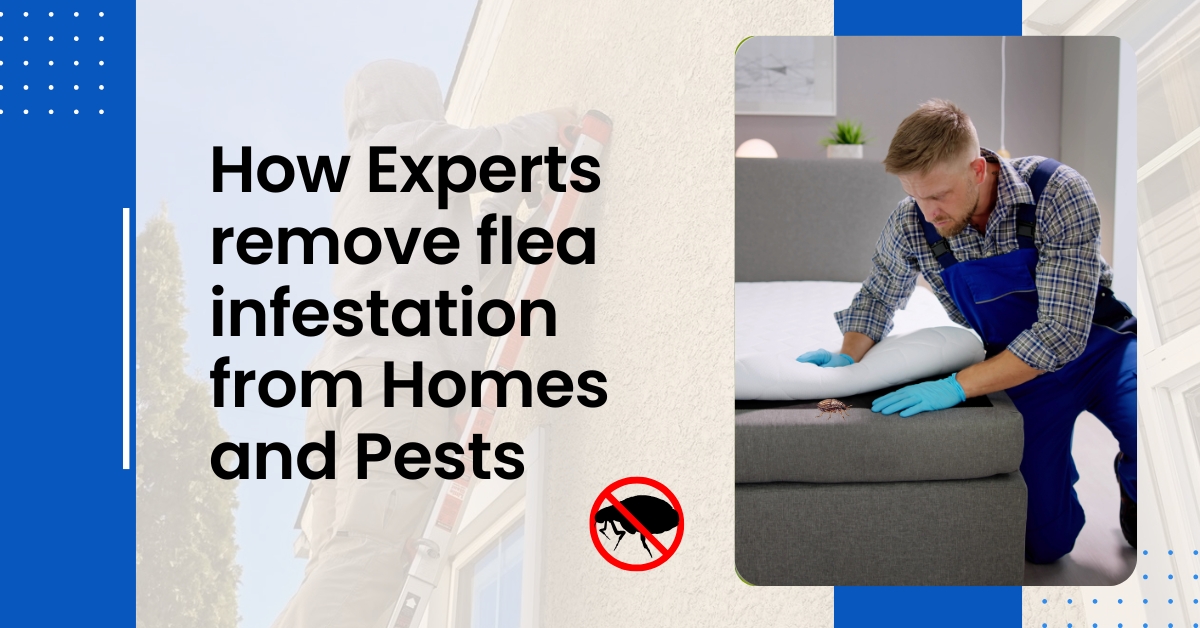
Before treatment begins, experts perform a detailed inspection. They examine carpets, rugs, upholstered furniture, pet bedding, baseboards, and cracks in flooring. Identifying all hotspots helps professionals target areas where fleas hide, ensuring Flea Removal Services are fully effective.
Pets are usually the main source of fleas in the home. Professionals recommend using vet-approved flea shampoos, topical treatments, or oral medications to remove adult fleas and prevent future infestations. Treating pets first ensures that home treatments are not undone by reinfestation.
Vacuuming is essential. Experts vacuum carpets, furniture, pet bedding, and floor crevices to remove adult fleas, larvae, and eggs. Vacuum bags or canisters are disposed of carefully to prevent fleas from returning. Frequent vacuuming reduces flea populations significantly when combined with other treatments.
Professionals use specialized sprays, powders, or foggers formulated to kill adult fleas, larvae, and eggs. These products are applied in carpet fibers, under furniture, in pet areas, and along baseboards. Unlike store-bought sprays, professional insecticides penetrate hidden spaces where fleas thrive.
IGRs prevent flea eggs and larvae from maturing into adults. Experts apply IGRs alongside adulticides to break the flea life cycle. This step ensures long-term results and significantly reduces the chances of reinfestation.
High-temperature steam is a secure and effective method to kill fleas and eggs hiding deep in carpets and furniture. Experts combine this with chemical treatments for maximum impact. Steam cleaning also sanitizes surfaces and removes flea dirt, further reducing infestation risk.
Fleas lay eggs in bedding, rugs, and soft furnishings. Professionals recommend washing all washable fabrics in hot water and drying on high heat to kill fleas at all life stages. This simple step complements chemical and mechanical treatments.
Fleas can survive in shaded yards, gardens, and under decks. Experts treat outdoor areas where pets frequent using secure insecticides and IGRs. Keeping outdoor areas clean, free of debris, and regularly mowing grass also helps reduce flea populations outside.
Fleas reproduce quickly, so follow-up inspections are essential. Professionals check for new flea activity, reapply treatments if needed, and adjust strategies based on infestation levels. Continuous monitoring ensures Flea Infestation Treatment is successful and long-lasting.
Prevention is key. Experts provide guidance on:
These preventive habits, combined with professional treatment, keep fleas away for good.
Many homeowners rely on store-bought sprays or homemade remedies, but these solutions usually address only visible fleas. Eggs and larvae hidden in carpets, pet bedding, and cracks continue to hatch, causing reinfestation. Professionals use a multi-step approach with advanced products, specialized techniques, and proper timing, ensuring complete elimination.
When it comes to expert Flea Infestation Treatment, Bug Squashers of Maryland provides a comprehensive solution. Their trained technicians assess your home, identify problem areas, and use a combination of mechanical cleaning, chemical treatments, and pet-focused care to eliminate fleas at every life stage.
Partnering with Bug Squashers ensures a tailored plan that removes fleas efficiently and keeps your home comfortable, hygienic, and pest-free. Contact us now!
Permanently removing fleas from your home is possible with a systematic approach that combines inspection, treatment, monitoring, and preventive habits. From treating pets and home interiors to managing outdoor areas, each step ensures all fleas, eggs, and larvae are eliminated.
By combining professional Flea Infestation Treatment with preventive strategies, homeowners can protect their pets, family, and property from these persistent pests. Experts like Bug Squashers of Maryland provide the experience, tools, and guidance needed to achieve long-term results.
Don’t let fleas take over your home—act today.
Protect your home and pets now. Contact Bug Squashers of Maryland for expert flea removal services and long-term flea infestation control.
Q1: How long does professional flea infestation treatment take to work?
Professional treatments typically start showing results within 24–48 hours. Complete elimination, including eggs and larvae, may require follow-up visits over 2–3 weeks for full control.
Q2: Are flea treatments secure for pets and children?
Yes. Experts use veterinary-approved products for pets and secure insecticides for home areas. Proper application ensures minimal exposure to children, keeping your family and pets secure during flea infestation treatment.
Q3: Can I get rid of fleas on my own at home?
DIY methods, such as flea shampoos or home sprays, can reduce visible fleas but rarely eliminate the entire infestation. Professional flea removal services ensure all life stages are treated for long-term results.
Q4: How can I prevent fleas from returning?
Preventive measures include regular pet treatments, vacuuming, washing bedding, maintaining lawns, and sealing entry points. Experts also provide flea control tips tailored to your home to keep fleas away permanently.
Q5: Do professionals kill fleas instantly?
Professional treatments target adult fleas, larvae, and eggs simultaneously. While adult fleas are removed quickly, breaking the life cycle through repeated treatments ensures lasting control.
Q6: Is outdoor flea control necessary?
Yes. Fleas can live in shaded yards, gardens, and pet areas. Flea removal services often include secure outdoor treatments to prevent reinfestation from external sources.
Q7: How often should homes be inspected for fleas?
Homes should be inspected whenever pets show excessive scratching, bites appear on family members, or after visits to areas prone to fleas. Regular monitoring prevents small infestations from becoming larger problems.
Q8: Can I perform effective flea treatment at home?
While minor flea control steps can be taken at home, like vacuuming, washing pet bedding, and using over-the-counter sprays, professional flea treatment at home ensures all life stages of fleas are eliminated. Experts target hidden eggs and larvae, providing a secure, thorough solution that DIY methods often miss